

7 Reasons Why Your Business Needs Policies & Procedures

Documented policies and procedures are a core component of legal compliance, corporate governance and risk management.
In today’s regulatory environment, businesses are expected not only to comply with applicable obligations - but to evidence that compliance through clear and up-to-date documentation.
Many organisations continue to operate informally until an audit, employment dispute or data breach exposes weaknesses in internal controls. At that stage, gaps in documentation can quickly translate into legal, financial and reputational risk.
A structured and regularly reviewed policy framework helps mitigate that exposure, promotes operational consistency and provides a defensible evidential record.
Set out below are seven key reasons why your business needs clear and effective policies.
1. You have Regulatory Obligations
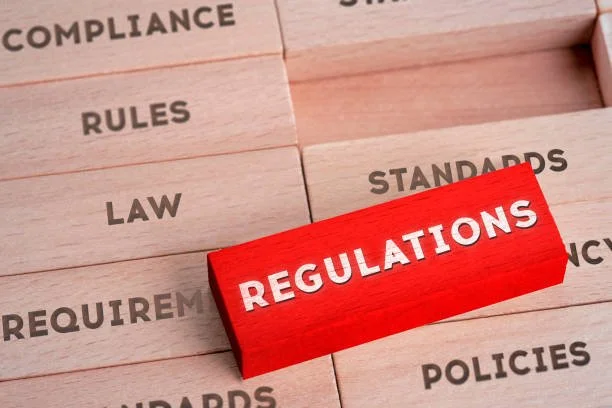
Across a wide range of sectors, documented policies and procedures are a prerequisite to lawful operation and frequently form part of the conditions of operation, authorisation and/or licensing.
For example, for firms regulated by the Financial Conduct Authority and the Prudential Regulation Authority, the requirement to maintain adequate systems and controls—including internal policies—is expressly set out in the FCA Handbook (SYSC).
Under the Senior Managers and Certification Regime, Senior Managers must be able to demonstrate that they have taken “reasonable steps” to prevent regulatory breaches. In practice, contemporaneous and properly maintained policies are a key component of that evidential framework.
Comparable expectations arise across other regulated sectors. Businesses operating under the oversight of the Medicines and Healthcare products Regulatory Agency are required to maintain documented quality systems, while those subject to environmental regulation must be able to evidence compliance with obligations enforced by the Environment Agency.
The consistent regulatory position is clear: compliance must be capable of verification through properly maintained documentation.
2. You are an Employer

UK employment law has long required employers to maintain clear and accessible workplace policies, particularly under the Employment Rights Act 1996 and the Equality Act 2010.
However, recent reforms introduced under the Employment Rights Act 2025 have materially expanded employer obligations across areas including remuneration, sickness absence, whistleblowing and dismissal rights. As discussed in our article last month“2026 Employment Law Shake-Up: 5 Key Changes Every Employer Must Know”, many of these provisions are already in force, with further changes expected in 2027.
In this context, reliance on generic or outdated template policies is increasingly difficult to justify. Businesses that have not undertaken a recent policy review are likely to face immediate compliance gaps and heightened exposure to tribunal claims.
3. You have Health and Safety Obligations
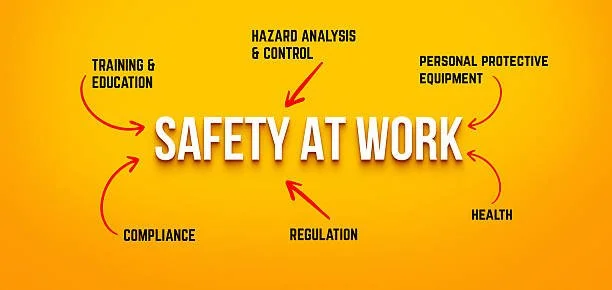
Under the Health and Safety at Work etc. Act 1974, employers with five or more employees are required to prepare and maintain a written health and safety policy and to communicate it effectively to staff.
Guidance published by the Health and Safety Executive makes clear that this policy must reflect the specific risks associated with the business.
Failure to comply may result in enforcement action and, in certain circumstances, personal liability for directors and senior management. A policy tailored to the organisation’s operations will carry significantly greater evidential weight than a generic template in the event of investigation or prosecution.
4. You Process Data

Data protection law remains one of the most technically complex and rapidly evolving areas of compliance.
The UK GDPR framework and the Data Protection Act 2018 impose detailed obligations in relation to data processing, retention and security.
Recent legislative developments, including the Data (Use and Access) Act 2025, introduce further refinements affecting automated decision-making, cookie consent, and complaints handling.
In this area, the distinction between a policy that appears compliant and one that is legally robust can be significant.
5. Your Business Requires Operational Consistency

Beyond regulatory compliance, documented procedures are essential to ensuring operational consistency and mitigating legal risk arising from informal practices.
In the absence of clear internal protocols, employees may rely on ad hoc communications. As explored in our article, “Deal or No Deal? How WhatsApp Chats Become Binding Contracts” such exchanges can, in certain circumstances, give rise to legally binding obligations prior to formal contract execution.
A clearly defined communications and contracting policy mitigates this risk by establishing authority thresholds, approval processes and documentation standards. For such policies to be effective, they must be accessible and capable of consistent application in practice.
6. You have Insurance & Risk Management Obligations

The adequacy of internal policies is increasingly relevant to external stakeholders, including insurers, investors and contracting counterparties.
Insurers may take governance frameworks into account when assessing risk and determining premiums, particularly in relation to professional indemnity cover. Similarly, public sector bodies and regulated clients frequently require evidence of internal policies as part of procurement and due diligence processes.
Government guidance on corporate governance reinforces the importance of effective internal controls and documented procedures.
A well-maintained policy framework therefore serves not only as a risk management tool, but also as a commercial differentiator.
7. Your Business is subject to Corporate Transparency

The Economic Crime and Corporate Transparency Act 2023 introduces enhanced requirements in relation to corporate transparency, including identity verification obligations for directors and persons with significant control.
Implementation guidance from Companies House continues to evolve as these provisions are brought into force.
More broadly, in the context of disputes—whether regulatory, commercial or employment-related—documented policies frequently form the benchmark against which conduct is assessed. They are often central to demonstrating that reasonable steps were taken and appropriate procedures followed.
Deficiencies in documentation do not merely create compliance risk; they may materially undermine a business’s position in mitigating litigation or regulatory enforcement proceedings.
Conclusion
Policies and procedures are not static documents, but an integral component of a business’s governance and compliance infrastructure.
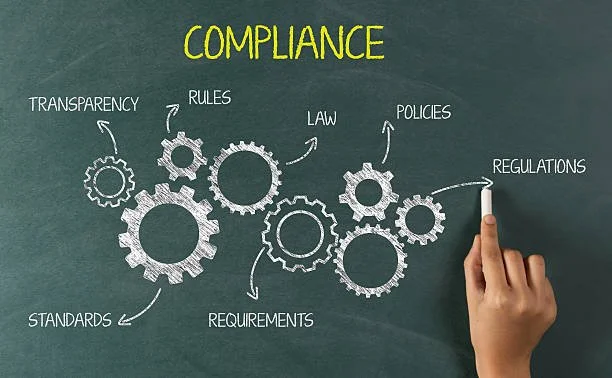
In light of ongoing developments across employment law, data protection and corporate governance, maintaining accurate and up-to-date documentation is essential. Regular review ensures alignment with current legal requirements and operational realities.
If your business requires advice on the preparation or review of policies and procedures, we are available to assist you across a range of sectors, ensuring your internal documentation is legally robust, commercially practical and aligned with current regulatory requirements.
To discuss your requirements in confidence, please contact us today. We advise various sectors of businesses on their governance, regulatory compliance and risk mitigation, and can provide you with full-spectrum implementation and tailored support in developing and implementing effective policy frameworks today.
